Detroit Regional Chamber > Advocacy > Beyond the Bill: Michigan Rep. Jamie Thompson (R-Brownstown)

Beyond the Bill: Michigan Rep. Jamie Thompson (R-Brownstown)

August 27, 2026 Ashley Mathews headshot

Ashley Mathews | Specialist, Public Policy and Business Advocacy, Detroit Regional Chamber

Beyond the Bill is a rotating segment that features a Republican or Democrat Michigan Legislator for Chamber members to get to know on a more personal level and highlight their legislative priorities for Michiganders.

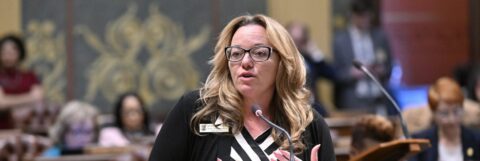
Michigan Rep. Jamie Thompson (R-Brownstown) is serving her second term in the 28th House District, representing residents in Brownstown Township, Flat Rock, Rockwood, Woodhaven, and parts of Taylor in Wayne County, as well as Berlin Township and Frenchtown Township in Monroe County.

Outside of her work in the Legislature, Thompson is a licensed practical nurse and has worked as a professional doula, empowering and providing emotional and educational support during pregnancy and childbirth.

Thompson currently serves as Vice Chair of the Health Policy Committee and as a member of the Energy Committee, Families and Veterans Committee, Regulatory Reform Committee, and the Select Committee on Protecting Michigan Employees and Small Businesses.

Healthcare, Affordability, and Accountability

Thompson said one of her top priorities this legislative term is her bipartisan Next of Kin bill package, which would establish a clearer process for families making medical decisions when a patient advocate has not been designated.

“During emergency medical situations when no patient advocate designation is in place, many Michigan families are left with little information and numerous questions on how critical decisions are made for their loved ones,” Thompson said. Drawing on her professional experience in health care, she noted that the current process can be “time-consuming, costly, and emotionally burdensome for patients and families alike.”

Thompson believes becoming a Next of Kin state would align Michigan with national best practices, reduce delays in care, and help families navigate difficult medical situations while maintaining clear legal and medical standards. She noted that the legislation passed the House unanimously and is awaiting further action.

Thompson also highlighted economic relief as a major focus of her legislative work. She pointed to House Bill 5879, part of the House Effectively Lowering Property Taxes and Utility Prices plan, as legislation she believes could have a significant impact on Michigan residents and businesses.

“This plan will help young people trying to buy their first home, seniors who need to downsize, families struggling to keep the lights on, and small businesses working to keep their doors open,” Thompson said. The proposal would eliminate the state property tax, repeal the pop-up tax, eliminate personal property taxes for small businesses, and lower utility costs for consumers.

Child welfare is another issue Thompson believes deserves more statewide attention. She expressed concern about cases involving children living in unsafe environments and pointed to oversight investigations that have highlighted shortcomings within Michigan’s child protective services system.

“We know from investigations and hearings done by the House Oversight Committee that the state has woefully failed to protect children… We need to do better for our most vulnerable,” Thompson said, emphasizing the need for reforms that better protect children and support families.


Building Michigan’s Workforce

Looking toward Michigan’s economic future, Thompson emphasized the importance of workforce development programs and skilled trades training. She cited increased investment in the Going PRO Talent Fund as one of the most important partnerships between industry, education, and government to strengthen Michigan’s automotive sector.

“A strong, experienced workforce makes our state attractive to a variety of sectors,” Thompson said. She believes expanding support for workforce training, skilled trades, and small businesses will help ensure Michigan remains competitive in automotive manufacturing and related industries.

Thompson also highlighted the role of Career and Technical Education (CTE) programs in preparing students for the jobs of the future. She specifically pointed to the Downriver Career Tech Consortium as an example of how students can gain valuable skills and direct pathways into high-demand careers. “These programs provide pathways to careers across a number of industries and put kids on the road to success,” she said.

Rooted in the 28th District

Thompson pointed to the Flat Rock Dam as one of her favorite spots in the district. She described the dam and the lake it creates as a popular location for fishing and recreation and an important part of the community’s identity.

“I have been working to keep the dam in place after plans were made to have it torn down,” Thompson said, “This dam and the lake it creates are central to the City of Flat Rock’s character and charm,” noting that she has worked alongside local officials and residents to preserve the landmark.

When asked about her favorite Michigan-made product, Thompson highlighted another southeast Michigan staple: Better Made potato chips, which have been produced in Detroit for generations. “Better Made potato chips, made in Detroit,” Thompson said, calling them a favorite Michigan-made staple product.