Detroit Regional Chamber > Advocacy > Chamber Committees in Action | More For Your Membership

Chamber Committees in Action | More For Your Membership

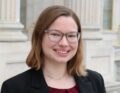
August 28, 2026 Ashley Mathews headshot

Ashley Mathews | Specialist, Public Policy and Business Advocacy, Detroit Regional Chamber

Throughout 2026, the Detroit Regional Chamber’s Public Policy and Business Advocacy team actively engages Chamber members and the business community, keeping them informed on emerging issues impacting the economy at the federal, state, and local levels of government.

One way that Premier, Signature, and Summit-level Chamber members maximize their memberships is by serving on one of the organization’s committees. It not only helps members stay informed on issues critical to their business but also contributes to the success and impact of the Chamber and the business community at large. These committees include the Advocacy Advisory Council, Energy and Environment Committee, and the Tax Policy Committee.

If you are interested in joining a Chamber committee, please reach out to your Engagement Representative.

Advocacy Advisory Council

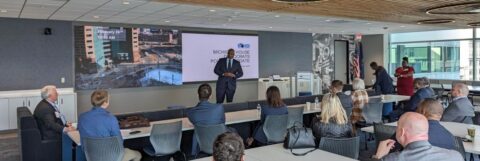
The Advocacy Advisory Council is designed to provide members with an opportunity to receive updates directly from the Chamber’s Public Policy and Business Advocacy team on issues impacting the business community, hear from guest speakers and leaders in the community, and provide valuable feedback to our team on policy and other issues at the local, state, and national levels. The council meets monthly and is an exclusive opportunity for Summit and Signature members of the Chamber.

This month, the Chamber’s Advocacy Advisory Council met twice, first welcoming Nick Hawatmeh, Chief of Staff to U.S. Rep. Lisa McClain (R-MI 9), for a conversation on federal policy priorities for the remainder of the year.

Hawatmeh discussed House Republican efforts to promote economic growth through permitting reform, regulatory modernization, tax policy, and domestic manufacturing initiatives. He also highlighted McClain’s work on housing supply issues and broader efforts to support business investment and economic development. The discussion included perspectives on trade policy, tariffs, and the future of U.S. manufacturing, as well as emerging issues surrounding data center development and AI. Committee members also discussed workforce shortages, healthcare challenges, and the role that skilled immigration programs can play in addressing talent needs across key industries.

Looking ahead, Hawatmeh provided an update on congressional dynamics and the federal budget process, noting that government funding discussions will be a key focus as Congress approaches upcoming deadlines.

The Council also welcomed Fred Durhal III, Director of State Government Affairs for Mayor Mary Sheffield, in August. Durhal emphasized the Sheffield administration’s commitment to maintaining strong partnerships with Detroit’s business community while advancing initiatives focused on housing, economic development, and neighborhood investment. He highlighted the city’s recently adopted balanced budget, improving fiscal outlook, and continued efforts to expand homeownership opportunities through the Move Detroit housing initiative. The conversation also focused on government modernization efforts, including plans to streamline permitting and licensing processes, improve customer service, and leverage technology to make city services more efficient and accessible.

Looking ahead, Durhal identified property tax reform as a key priority for the administration and discussed Detroit’s ongoing advocacy efforts in Lansing to secure resources that support economic growth, housing development, and community investment in Detroit.
Brian Shoaf headshot

“Our committees provide members with a unique opportunity to hear directly from policymakers, industry leaders, and the experts shaping issues that impact our Region’s economy. Beyond staying informed, committee participation allows members to share their perspectives, help identify emerging challenges and opportunities, and play an active role in advancing the Chamber’s advocacy efforts on behalf of the business community.” 

– Brian J. Shoaf, Vice President, Public Policy and Business Advocacy, Detroit Regional Chamber

Energy and Environment Committee

The Energy and Environment Committee examines environmental and energy regulations for air, land, and water at the local, state, and federal levels. Participants meet quarterly and must be a premier Chamber member or higher, and work in the energy, utility, environment, or regulatory fields.

This month, the group welcomed John Mooney, Director of the Air and Radiation Division for Environmental Protection Agency Region 5, for a discussion on regional air quality trends, ozone attainment, and emerging regulatory issues.

Mooney highlighted the significant air quality improvements achieved across Southeast Michigan over the past several decades while noting that recent wildfire smoke events have introduced new challenges for air quality management. He also discussed EPA’s continued efforts to improve air monitoring capabilities through expanding sensor technology and data collection tools. A key topic of discussion was EPA’s proposed redesignation of the Detroit area to attainment for federal ozone standards. Mooney noted that attainment status can help provide a more stable regulatory environment and support economic development through a more streamlined permitting framework. EPA expects additional action following the conclusion of the current ozone season.

Committee members also received updates on pending federal air quality regulatory reviews, the status of PM2.5 designation efforts, and how EPA is working with state partners to address the air quality impacts of exceptional events such as Canadian wildfire smoke.

Tax Policy Committee

The Tax Policy Committee analyzes legislative proposals addressing taxation and its impact on business. The committee meets quarterly, and members must have a premier membership or higher.

The Committee recently welcomed Jared Fleisher, Chief Executive Officer of Bedrock Detroit, for a discussion of Detroit’s property tax structure and potential reforms to improve the city’s economic competitiveness.

Fleisher highlighted Detroit’s comparatively high property tax burden and discussed how existing tax policies can influence investment, redevelopment, and population growth. He outlined several concepts that have emerged in ongoing policy conversations, including a greater reliance on land value taxation, the potential use of a local option excise tax, and reforms to existing tax abatement programs. Michigan is one of a small number of states that do not authorize local consumption taxes, while 37 states currently allow some form of local excise tax.