

- Michigan Reconnect is delivering measurable results. Nearly 17,000 adults have graduated, with employment rising more than 12 percentage points and median annualized wages increasing about $13,400 within a year of graduation.
- Adult attainment is essential to Michigan’s talent and economic future. By helping working adults earn credentials and move into high-demand fields such as health care and education, Reconnect strengthens the workforce as the state faces an aging population and projected labor-force decline.
- The Detroit Regional Chamber helped turn a policy vision into statewide progress. The Chamber elevated the Reconnect model at the Mackinac Policy Conference, championed Michigan’s 60% attainment goal, launched Detroit Reconnect, and continues to lead regional action through Detroit Drives Degrees.

Key Takeaways
Nearly a decade ago at the 2018 Mackinac Policy Conference, education and regional stakeholders, including the Detroit Regional Chamber and Lumina Foundation, highlighted Tennessee Reconnect as an example of how a state could invest in adults seeking a college credential that could be replicated in Michigan.
A few years earlier, the Chamber had set a goal of ensuring that 60% of the Region’s working-age population had a postsecondary degree or credential by 2030. Given the state’s stagnant population growth, the Chamber identified that Michigan could not meet its talent and attainment goals by focusing solely on students entering high school directly.
What was needed was an affordable, practical path for adults who were working, raising families, or returning to college to earn a postsecondary credential.
As a result, Michigan Reconnect was born.
What began as a bold investment in adult learners is now translating into measurable gains in employment, earnings, and educational attainment.
Michigan Reconnect is helping adults return to college, and they are graduating — nearly 17,000 to date — seeing significant increases in employment and earnings, moving into critical industries, and helping the Region and state progress toward their goals of 60% educational attainment by 2030.
(Under Gov. Gretchen Whitmer, the state adopted the same goal after the Chamber set it for the Region.)
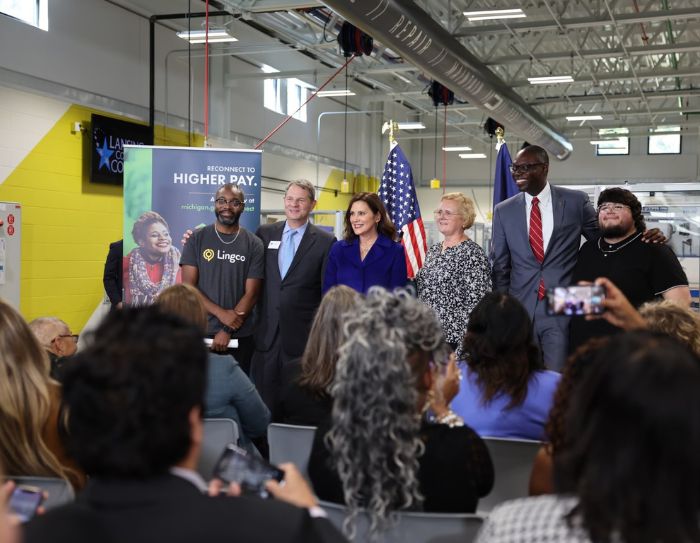
The Data Now Show Meaningful Economic Progress
The latest analysis from the Michigan Center for Data and Analytics provides the clearest evidence yet that Michigan Reconnect is producing results for graduates.
Through the 2024-2025 academic year, 82,417 Reconnectors had enrolled in education through the program, and a September 2026 study found that Michigan Reconnect had 16,818 graduates.
While it will take time to understand full employment outcomes, the early findings are significant:
- Employment increased. The employment rate among Michigan Reconnect graduates rose by more than 12 percentage points. Associate degree and certificate recipients experienced nearly identical increases in employment among graduates who were not actively enrolled in another academic program.
- Wages grew substantially. One year after graduation, median annualized wages were approximately $13,400 higher than graduates’ previous wages and approximately $16,500 higher than those of peers with only a high school diploma. Associate degree recipients experienced average earnings growth of more than $15,000 after graduation.
- Graduates moved into industries Michigan needs. Following graduation, a greater proportion of Reconnectors worked in health care and education, while a smaller proportion worked in retail trade and food service.
- Some graduates continued their education. By June 2025, 761 Reconnect award recipients had earned bachelor’s degrees. More than half of those degrees were in business or health care programs.
- The state’s investment is projected to pay for itself. Michigan invests approximately $2,500 per Reconnector, including scholarship and program expenses. Based on an estimated annual increase of $380 in state income tax revenue per graduate, the state is expected to recover its typical investment in about seven years after graduation. Subsequent years would represent net gains in state income tax revenue, on average.
These outcomes are especially relevant as Michigan confronts an aging population, a shrinking labor force, and persistent demand for workers in fields such as health care. The broader occupational outlook, presented alongside the Reconnect findings, projects that Michigan’s labor force will decline by 1.3% from 2024 to 2034 and that future employment growth may be constrained by worker availability.
Michigan Reconnect helps address that challenge by creating pathways for adults who are already here to gain skills, earn credentials, and enter or advance in critical industries.
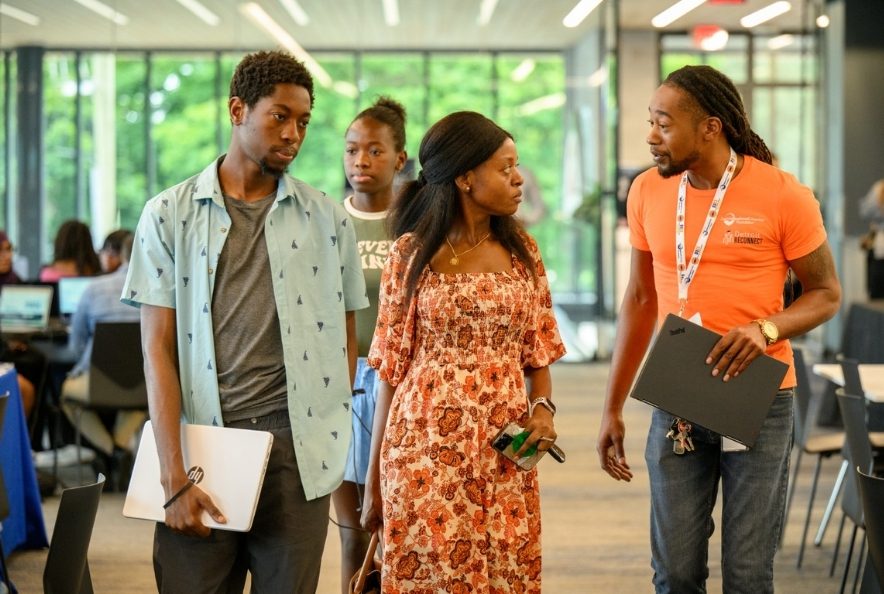
Advocacy Paired With Regional Action
As the Chamber advocated for a statewide program, it established Detroit Reconnect in 2019 to provide college-agnostic navigation and one-on-one assistance to adults seeking to enroll, re-enroll, upskill, or make use of tuition assistance.
Backed by the Chamber and other groups, the Michigan Reconnect Act was passed in 2020, and the program launched in February 2021. Michigan Reconnect provides eligible adults with tuition support toward an associate degree or credential at a Michigan community or tribal college. The program began with an eligibility age of 25, which has recently been permanently lowered to 21.
The Chamber’s role has extended beyond advocating for the creation and continuation of Michigan Reconnect.
Through Detroit Drives Degrees, the Chamber has made adult attainment a core component of the Detroit Regional Talent Compact. Its strategic plan calls for establishing scholarship opportunities for adult learners, expanding adult-friendly programs, strengthening navigation, improving credit mobility, and doubling adult enrollment in the region. The plan also identifies advocacy and policy coordination as a foundational tenet of the regional work.
Progress Worth Celebrating and Continuing
Michigan Reconnect remains a relatively new program, and the state will need continued analysis to understand longer-term completion, employment, wage, and transfer outcomes. The program’s latest data also point to areas where more support is needed.
Nearly half of enrolled Reconnect students earned fewer than 12 credits during the most recent academic year, underscoring the importance of flexible programs, proactive advising, and wraparound services tailored to the realities of adult life.
Still, the evidence available today is encouraging.
Adults are returning to education. Graduates are becoming more likely to be employed. Their wages are increasing. More are working in health care and education. Hundreds have continued to pursue bachelor’s degrees. Michigan is positioned to recover its investment through higher earnings and state income tax revenue.
Nearly a decade after the Chamber brought the Tennessee Reconnect model to Mackinac Island, Michigan has its own story of progress to tell.
Michigan Reconnect demonstrates what can happen when policymakers, colleges, advocates, employers, and community partners treat adult education not as a secondary concern, but as a central component of the state’s talent strategy.