
This week, voters approved the 10-year transit millage proposal backed by Wayne County Executive Warren C. Evans and the Detroit Regional Chamber. By eliminating opt-out communities in the county, the millage is a major step toward creating a fully connected Detroit Region through public transit – one of the Chamber’s top public policy priorities over the past 20 years.
Regional Transit Gets Big Boost From Wayne County Voters
August 5, 2026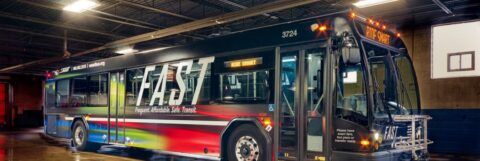

“Having our three leading counties fully opted into SMART is a major step toward creating the fully connected regional transit system the Detroit Region so desperately needs to grow our economy. We applaud Executive Warren Evans and SMART’s Tiffany Gunter for championing this critical effort as it will greatly improve transit for people and businesses across the tri-counties.”
– Sandy K. Baruah, Chamber President and Chief Executive Officer, Detroit Regional Chamber
Evans, a long-time champion for expanded regional transit, led the effort to educate voters about what was at stake and the benefits of having all of Wayne County’s 43 communities in the SMART system; 17 had previously opted out.
The Wayne County Public Transportation Millage renews existing SMART millage funding for current participating communities while expanding transit opportunities throughout all of Wayne County. For homeowners in communities already receiving SMART service, the proposal represents a renewal of the current millage, not a tax increase.
“For the first time, every community in Wayne County will be part of one connected system, and that means more workers reaching jobs, more seniors keeping their independence, and more students getting where they need to go,” said Tiffany J. Gunter, General Manager and Chief Executive Officer of SMART.
Revenue gathered from the millage would be distributed among Wayne County, the Suburban Mobility Authority for Regional Transportation (SMART), the Detroit Department of Transportation (DDOT), and other community and regional transit providers. The proposal is estimated to generate roughly $57 million in the first year. Wayne County officials say SMART would add eight new bus routes, five new route extensions, and on-demand service over approximately three years.
“Now the real work begins,” Gunter added. “We will roll out new and expanded service in phases, shaped by community input, with the same fiscal discipline and transparency that earned this vote. SMART has spent the last several years proving what this organization can deliver. We are ready to prove it again.”
Adam Majestic, Director of Public Policy and Business Advocacy for the Detroit Regional Chamber, appeared alongside Executive Evans at a Wayne County Transit for All press conference on July 15, noting that reliable transportation is essential to helping employers grow and compete.
“Businesses succeed when employees and customers can reliably reach them,” Majestic said. “Strong public transportation expands workforce access, supports local small businesses and makes Wayne County more competitive by giving residents and employers the transportation options they need to thrive.”
After Oakland County voters approved a similar millage proposal in 2022 to support and expand public transit services, the county can now point with pride to a 49.5% ridership increase, with 251,208 rides in 2025.