
Detroit Regional Chamber > Advocacy > Beyond the Bill: Sen. Michael Webber (R-Rochester Hills)

Beyond the Bill: Sen. Michael Webber (R-Rochester Hills)

March 4, 2026 Ashley Mathews headshot

Ashley Mathews | Specialist, Public Policy and Business Advocacy, Detroit Regional Chamber

Beyond the Bill is a new rotating segment that features a Republican or Democratic Michigan Legislator for Chamber members to get to know on a more personal level and highlight their legislative priorities for Michiganders.
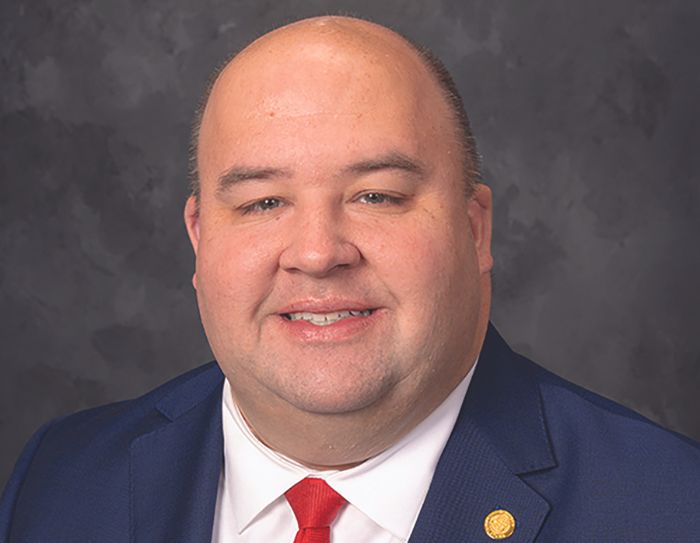
Sen. Michael WebberThis week, the Chamber is spotlighting Michigan State Sen. Michael Webber (R-Rochester Hills), who shared his perspective on Michigan’s economic sector, the 9th district, and his legislative priorities.  

Michigan Sen. Michael Webber (R-Rochester Hills) represents Michigan’s 9th Senate District, which includes the cities of Rochester, Rochester Hills, Troy, and Utica, along with parts of Oakland Township, Shelby Township, and Sterling HeightsFrom 2015 to 2020, Webber served in the state House, representing the 45th District encompassing the greater Rochester area. As a resident of the district for over 30 years, Webber graduated from Rochester Adams High School before obtaining his insurance agent license. He earned his Bachelor’s degree in International Relations from Michigan State University’s James Madison College.  

From mental health reforms to defending Michigan’s role in the aerospace economy, Webber’s priorities reflect both the needs of his district and the state’s long‑term competitiveness. His focus on economic stability, education outcomes, and Michigan’s long-term infrastructure needs continues to shape his approach to policymaking. 

Supporting Michigan’s Economy

On the economic front, Webber highlighted his vote on the Earned Sick Time and Minimum Wage legislation as one of the most consequential decisions of the session.  

“Thousands of people in the hospitality industry and countless small businesses made their voices clear on what the unamended ballot proposal language would mean for their livelihoods,” he said.  

While acknowledging the final compromise still presents challenges for the state’s economy, Webber believed the action taken prevented far greater harm. He noted that supporting the amended version “averted an absolute economic disaster,” although “more work is needed on this” moving forward. 

A Glance at District 9

When discussing district-specific concerns, Webber emphasized the significance of Michigan’s defense and aerospace sector, an industry deeply rooted in his region. As Co-Chair of the bipartisan Defense and Aerospace Caucus, he is committed to ensuring the state remains competitive by protecting these positions, many of which are high-skill and high-wage, which remains a priority for him as Michigan looks to the future.  

“Michigan has a long, proud legacy in the defense and aerospace industry, and we need to ensure we work on keeping those jobs and that economy here, especially as other states compete for what we have,” he said.  

One of Webber’s favorite places in the district is Innovation Hills in Rochester Hills. This area sits on around  110 acres of green space and includes access points to the Clinton River. He described it as a standout community space that “includes a trail, park, playground and other outdoor activities for residents to enjoy,” and has quickly become a reliable gathering place for families and residents. 

Legislative Passions & Priorities

“Working on reforms to Michigan’s mental health care system” is a policy issue that Webber is most passionate about right now.  He has spent considerable time speaking with advocates and families who interact directly with the system. 

As he put it, his focus includes “improving care and patient rights and seeking policies that will increase accountability within this area of state government.” Webber emphasized that notable progress would require listening closely to those who live these challenges every day. 

Looking ahead, Webber sees Michigan facing several challenges that will require long-term planning and sustained investment.  

“I think declining literacy and education metrics, along with low educational rankings and not adequately setting our kids up for success, will be an issue in the near future,” he said.  

Webber foreshadows other challenges ahead that the district will have to face.  

“Additionally, the state of our infrastructure and overbearing tax burdens also pose a risk to the state’s long-term economy,” he noted. 

Overall, Webber’s focus remained clear: strengthening systems that families rely on, supporting Michigan’s workforce, and making sure the state is positioned to thrive in the decades ahead.