Detroit Regional Chamber > Mackinac Policy Conference > Culture as Capital: Driving Growth and Community

Culture as Capital: Driving Growth and Community

May 28, 2026

Top Takeaways

  • Michigan’s arts and culture sector supports 144,000 jobs and contributes $20.5 billion annually — roughly 3% of the state’s GDP. 
  • Cultural institutions are increasingly serving as economic development drivers, tourism anchors, and workforce magnets. 
  • Leaders emphasized that long-term growth depends on investing in community, storytelling, talent retention, and inclusive experiences. 

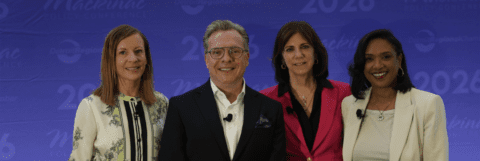
Michigan’s arts and culture sector is increasingly being recognized not simply as an amenity, but as a significant economic engine. During a panel discussion at the 2026 Mackinac Policy Conference, leaders from some of the state’s most prominent cultural institutions discussed how museums, public spaces, and music-centered experiences are contributing to tourism, workforce development, and neighborhood revitalization across Michigan.  

Moderator Megan Spanitz of the Detroit Regional Chamber highlighted the scale of the industry’s impact, noting that Michigan ranks 15th nationally in arts and culture economic activity. She also cited research showing the broader arts and culture sector supports approximately 144,000 jobs and contributes $20.5 billion in annual economic activity — roughly 3% of Michigan’s GDP.  

Cultural Assets as Economic Engines

Panelists emphasized that cultural destinations increasingly influence travel decisions, regional branding, and local investment. Charles Burke of Frederik Meijer Gardens and Sculpture Park said cultural institutions help attract visitors who stay longer and spend more in those communities. 

“We’re seeing more people traveling in from Detroit, South Bend, and Chicago, spending more time in Grand Rapids because these cultural experiences create real reasons to stay and engage with the community,” Burke said. 

Robin Terry of the Motown Museum described how cultural investment is reshaping Detroit’s neighborhoods. 

“With our project and neighboring developments, you have over $3 billion being pumped into this part of Detroit, transforming businesses, neighborhoods, and opportunities for residents,” she said. 

Workforce Talent and Attraction

The discussion also focused heavily on workforce development and talent retention. Patricia Mooradian of The Henry Ford said cultural institutions now compete aggressively for skilled workers while also trying to preserve mission-driven workplace cultures. 

“We take culture very seriously because we want everyone to feel this inclusive environment is welcoming and supportive, especially when people face real-life challenges,” she said.  

Burke added that labor shortages and rising wage pressures are becoming long-term concerns for many nonprofit institutions. 

“It’s really competitive out there to attract and retain talent, and organizations may have to overspend in the short term because culture ultimately matters,” he said.  

Storytelling, Identity, and Michigan’s Future

Throughout the conversation, panelists repeatedly emphasized the importance of storytelling and regional identity, agreeing that Michigan must do a better job of promoting its cultural assets nationally and internationally. 

“We have to celebrate those unique experiences that people can only have in Michigan and make sure we are proudly singing our own song,” Terry said. “We are known around this globe, not only for cars and stars, but for some really great things. This is our moment.” 

Looking ahead, the speakers expressed optimism that continued investment in culture, tourism, and community partnerships can strengthen Michigan’s economy while also helping create more vibrant, inclusive communities. As institutions expand campuses, educational programming, and public engagement efforts, cultural leaders see significant opportunity for Michigan to compete not only as a business destination, but also as a place where people want to live, work, and build community. 

“The balance of culture, commerce, and community is essential,” Mooradian said. “Culture is our mission, commerce is our business, but community is ultimately why we do it.” 

This session was editorially crafted in partnership with Crain’s Content Studio and was sponsored by the Ralph C. Wilson, Jr. Foundation.