
March 5, 2026 | This Week in Government: House Moves $152M for Selfridge Supplemental
March 6, 2026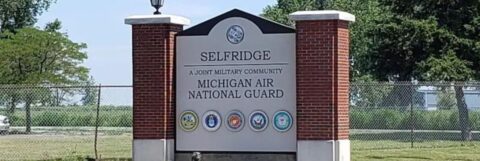
Each week, the Detroit Regional Chamber’s Government Relations team, in partnership with Gongwer, provides members with a collection of timely updates from both local and state governments. Stay in the know on the latest legislation, policy priorities, and more.
House Moves $152M for Selfridge Supplemental
The House moved quickly to pass a $152 million supplemental that funds the construction of runways at Selfridge Air National Guard Base on Tuesday.
House Speaker Matt Hall, R-Richland Township, first raised the possibility of supplemental funding during a press conference Tuesday afternoon.
Hours later, the House passed HB 4572, a shell appropriations bill that was introduced last year during the 2025-26 budget process. The bill cleared the chamber 65-41.
Last Wednesday, House Appropriations Committee Chair Rep. Ann Bollin, R-Brighton, told Gongwer News Service that she did not anticipate a supplemental.
It is unclear if the Senate will follow suit.
Senate Appropriations Committee Chair Sen. Sarah Anthony, D-Lansing, said in an interview she learned of the actions of the House on Tuesday through inquiries from reporters.
Anthony said her priority is to tackle the roughly $1 billion budget shortfall the state is facing in the upcoming fiscal year, which has many moving parts, not just the priority that Hall chose to quickly move on.
“I think they need to call us,” Anthony added.
She said that with the projected budget gap the state is facing, simply pivoting to a $152 million General Fund item because Hall wants to do so is tough to consider without serious negotiations. Anthony said she is not saying no outright, but would like to see collaboration and conversations after last year’s budget fight.
Anthony called it a sad state of affairs after last year’s budget issues to see movement “not based on conversations but based on press conferences and floor actions” without even speaking to the Senate first.
Sen. Kevin Hertel, D-St. Clair Shores, who has been a key advocate for Selfridge, as it is in his district, did not directly address the supplemental that passed.
Rather, Hertel said he is “committed to ensuring the Legislature makes smart, fiscally responsible investments in the transformational infrastructure upgrades already underway, so we’re fully prepared to welcome the new fleet of F15-EXs and secure a long, bright future for the base and our region.”
The speed at which the supplemental was passed on Tuesday seemed to test the limits of the new laws around transparency for legislatively directed spending items. Hall said the transparency laws did not apply because the money was being directed to a state department.
“It’s a National Guard Base, not a nonprofit,” Hall said. “This is part of the veterans department … the purpose was not to force-transfer normal department budgets to be subjected to the 45-day wait period.”
House Minority Leader Rep. Ranjeev Puri, D-Canton Township, said House Democrats had minutes to review the supplemental.
“Obviously, Selfridge is really important to Michigan for many reasons. We want to do whatever we can to stand up for that,” Puri said. “Why not just wait until the full budget? Which is just apparently a few weeks away, if we’re actually going to do this on time.”
Puri said there was uncertainty around how Hall was applying the ethics and transparency laws.
“It seems like he kind of shoots from the hip, when it’s convenient to pull out these ethics and transparency measures and when to ignore them,” Puri said.
It’s unclear whether the state owns Selfridge Air Base, Puri said.
“From our estimation, we don’t, and so I don’t understand why this doesn’t follow the LDSI rules that have been established, and why he gets to make an exception to make his political talking point or to appease Trump or whatever he’s trying to do,” he said.
Rep. Denise Mentzer, D-Mount Clemens, voted for the supplemental, but she said the process it went through was wrong.
“They’re still in the planning stages. They don’t have shovels in the ground,” she said of the Selfridge site. “This is actually a bit premature, and it hasn’t gone through the appropriations process.”
HB 4572 passed the House 65-41. Rep. Kimberly Edwards, D-Eastpointe; Rep. John Fitzgerald, D-Wyoming; Rep. Peter Herzberg, D-Westland; Rep. Tullio Liberati Jr., D-Allen Park; Rep. Mike McFall, D-Hazel Park; Rep. Mentzer; Rep. Will Snyder, D-Muskegon; Rep. Samantha Steckloff, D-Farmington Hills; Rep. Angela Witwer, D-Delta Township; and Rep. Mai Xiong, D-Warren, voted with the majority.
The goal is to ensure that construction begins at Selfridge before President Donald Trump leaves office, Hall said at the press conference.
“To rely on the federal government to fund these runways and get these under construction on the timeline that we need to get this fighter mission in place in 2028 … the state of Michigan is going to have to step up, and we’re going to have to pay for this,” Hall said. “I think it’s really important to get them before President Trump leaves office.”
Hall said the state government could move faster than the federal government.
“The Air Force was planning on this in ’29 and ’30. If we’re going to move this up to ’28, we’ve got to pay for that runway, and we’ve got to get that guaranteed quickly,” Hall said.
The original timeline laid out for Selfridge was for the fighter jets to be delivered by 2028
Mentzer said the money would make a huge difference for Southeast Michigan, but she said she was unaware of anyone from the base forecasting a multi-year delay.
Gov. Gretchen Whitmer did not address the need for the state to provide a supplemental for Selfridge in a comment provided by her press secretary, Stacey LaRouche.
Rather, the statement emphasized that Whitmer remained committed to securing the new fighter mission.
“The governor will continue to work with the Legislature and federal officials to secure funding to make improvements to Selfridge for the new fighter and tanker missions, secure military and civilian jobs, and cement Michigan’s status as a hub for defense and aerospace will into the future,” LaRouche said. “The governor looks forward to welcoming the first planes as they land at Selfridge.”
The state supplemental would cover the runways, and the federal government would still build out the rest of the site, Hall said.
“When Governor Whitmer and I went to meet with President Trump and Secretary of War Hegseth, they said they cut through the bureaucracy, they found us a place, and came back to give us the commitment,” Hall said. “Now, we have to do our part to get this done while President Trump’s still in office.”
Rep. Ron Robinson, R-Utica, talked about the importance of the project to Macomb County and in his district.
“It’s an exciting time for Selfridge. It’s an exciting time for Macomb County. It’s going to affect the whole state in a positive way,” he said.
Rep. Alicia St. Germaine, R-Harrison Township, and Rep. Joe Aragona, R-Clinton Township, also praised the project and said it was important for Macomb County to get it done.
Hall said he wanted to move the supplemental through the Legislature and to the governor’s desk by the Legislature’s spring break so construction could begin on the runways this year.
“We can’t wait on the federal bureaucracy to get this done,” he said. “We can’t wait on Congress to get this done. We can’t wait on Congress to get this done.”
House has Budget Targets, Senate Making Progress
House Appropriation subcommittee chairs have been provided with budget targets, and Senate Appropriations subcommittees are also making progress.
“All the subcommittees have their targets, and they’re working very aggressively on that,” House Appropriations Chair Rep. Ann Bollin, R-Brighton, told Gongwer News Service Wednesday.
House targets in March is a significant departure from last year, when subcommittees did not put forward any recommendations until well after the May Consensus Revenue Estimating Conference.
Bollin declined to provide specifics on numbers, but she said the topline budget total for next fiscal year was “less than this year.”
“I’m continuing to have meetings and work with the subcommittee chairs, not only on the targets, but how we’re going to be including our priorities as we move through the budget process,” she said. “We really want to, obviously, cut the waste, make sure that the state government is running efficiently. We want to make sure our kids are educated … shrinking government and making life more affordable.”
Senate Appropriations Chair Sen. Sarah Anthony would not confirm whether Senate subcommittee chairs had been provided targets, but said the subcommittees are hearing executive recommendation presentations and speaking with stakeholders to build out their budget recommendations.
“We’re moving along in the process,” Anthony said.
Bollin said the House is in a better position this year to deliver a budget in a timely manner.
“We had two years where (Republicans) were completely shut out of the budget process,” she said. “We went line by line last year, and it was not for naught. We have a much better understanding. We’ve been through multiple CRECs, and we have somewhat of a picture of where the state’s headed financially.”
The $800 million revenue shortfall predicted by the January CREC would not be bridged with new taxes, Bollin said.
She also said the $5 billion property tax cut proposed by House Speaker Matt Hall would be revenue-neutral.
“As our proposal unfolds, and we’re able to do that, we’ll do it within the confines of making sure this year’s budget is less than last year’s, and shoring up where we think in needs to be shored up, and what needs to be held harmless is (held harmless).”
Those cuts will come by, once again, reviewing priorities, Bollin said.
“We still have over 2,000 ghost employees, unfilled FTEs,” she said. “There’s room in the state budget to accomplish many of our goals.”
In Bollin’s estimation, the conversation around property tax cuts does not need to be tied to the budget.
“What we have to do is I want to make sure that life is more affordable,” she said. “We’re taking care of our most vulnerable. We have a good, strong business climate… We need to make sure our education system improves…I don’t think we have to gut it. We just have to cut it.”
In terms of a timeline, Bollin said the House was not inclined to agree to a budget that would raise a lot of taxes and would fight for a budget that hit Republican priorities. She said if that took until September 30, so be it, but she was hopeful this year it would come beforehand.
“I think we have a lot of common ground to work from,” she said. “Where there’s a will.”
Michigan is Top 10 Nationwide for Growth of Advanced Placement Participation, College Board, Data Shows
New data released by the College Board this week, based on students’ spring 2025 Advanced Placement test scores around the country, shows Michigan is one of 10 states that have seen the most growth in high school participation in the college preparation courses over the past decade – and during that time, students increased the state’s scoring average as well.
The 2025 AP results data put Michigan at number nine out of 50 for increasing student participation in the AP program, the Department of Education announced Tuesday. The 2025 graduating class saw a 2.4-percentage-point increase in students who took an AP exam compared to the prior year, raising the total portion of graduates who had taken a test to 33.9%.
The highest portion of test-takers in the country is in Washington, D.C., where some 63% of last year’s graduating seniors had taken an AP exam at some point in their high school careers. The district has a significantly higher percentage than any state. The next highest ranked are New York and Massachusetts, with 48%, while the national average is 37%.
Since 2015, Michigan has increased its participation by 5.2 percentage points, which Superintendent of Public Instruction Glenn Maleyko attributed to a statewide effort to expand access to programs like AP and increase awareness among families when a student is a strong candidate to succeed in specialized courses.
“Michigan’s Advanced Placement program continued its strong upward trajectory in 2025, with meaningful gains in student participation, performance, equity, and college credit savings,” Maleyko said in a Tuesday statement. “College Board data confirms that Michigan is expanding access to rigorous coursework and delivering results for students across the state, aligned with Goal 4 of Michigan’s Top 10 Strategic Education Plan, to expand secondary learning opportunities for all learners. This progress reflects the dedication of our students, educators, and school leaders, and they should be proud of what they have achieved.”
Over the decade, more students from Michigan earned high enough scores on AP exams to receive college credit for the classes they took in high school. On a five-point scale, scoring a three or higher on an AP exam is a passing score and will translate to credit hours at many colleges and universities, and the number of Michigan students who scored at or above a three grew from 18.8% in 2015 to 23.7% in 2025.
The improvement in scores ranked Michigan 13th in the nation for growth in achievement on the AP exams. MDE said the state also saw improvement across all demographic groups taking the exams, indicating “improved equity in access and success.”
For the past four years, MDE has been sending an “AP potential letter” to roughly 80,000 households informing parents and guardians that their child was identified based on their PSAT scores as likely to score at or above a three on an AP exam. Department officials said sending the letters, an activity only one other state partakes in, has helped diversify the state’s AP participation and make families aware of the cost-saving potential for students who pass an AP exam.
Across public and non-public schools, MDE said students from all grades who took at least one AP exam in 2025 earned 99,306 qualifying AP scores, representing 297,918 potential college credits worth approximately $166 million in potential savings on postsecondary courses.
“Michigan’s statewide growth in AP engagement will help more families lower the cost of higher education and envision a bright future for their kids,” Gov. Gretchen Whitmer said in a statement. “I’m proud of the progress we’ve made connecting students and classrooms with the latest tech, investing in teachers, raising per-student funding to over $10,000, and delivering free breakfast and lunch to all 1.4 million public school students.”
Talks are Underway to Find Settlement in Work Projects Lawsuit
The potential for a settlement emerged Friday in the litigation surrounding the move by the House Republican majority to cancel spending for some work projects.
Attorneys for the Department of Attorney General, House of Representatives, and Michigan Strategic Fund said Friday during a Court of Claims hearing that they intend to pursue negotiations in the matter.
Following an off-the-record status conference, Judge Michael Gadola adjourned the hearing in House v. Department of Technology, Management and Budget et. al (COC Docket No. 26-000007). The parties must update the court on the status of the conversation through filings by 4 p.m. on March 13, Gadola wrote in an order Friday.
Lauren Leeds, a spokesperson for the State Budget Office, said in a statement on Friday that the parties had agreed to a pause “to discuss possible resolutions outside of court.”
“There’s an indication that the parties are interested in initiating some discussions toward a resolution in this matter,” he said. “It would be the court’s hope and desire that they’re fruitful and lead to a resolution in this matter.”
The formal hearing was just a few minutes.
In December, the House Appropriations Committee voted to discontinue statutory work projects initially said to total $645 million, though in the months since, there is agreement that the actual number is much lower. Exactly how much lower is unclear.
The Management and Budget Act allows a single Appropriations committee, without the concurrence of the other, to essentially veto appropriations items that the State Budget Office designates as work projects, allowing the funding to be spent over four years instead of the usual single year an appropriation lasts.
After Republicans on the House Appropriations Committee voted to exercise the powers far more sweepingly than ever before, majority Democrats in the Senate asked Attorney General Dana Nessel for a legal opinion on the action.
Nessel held that the provision in the Management and Budget Act is unconstitutional, as it conflicts with the bicameral nature of the Legislature. House Republicans then filed suit after departments moved to begin spending the funds.
But Gadola issued a preliminary injunction in January to block the state from spending the money, saying House Republicans were likely to prevail. Nessel has appealed. On Feb. 5, the Court of Appeals denied the state’s motion for immediate review.
SCOTUS Passes on Voter Roll Lawsuit; Michigan QVF Removal Policies Deemed Sufficient by Lower Courts
The U.S. Supreme Court won’t hear a case regarding Michigan’s voter rolls and whether election officials in the state have sufficiently complied with the National Voter Registration Act, ending a conservative firm’s quest for legal standing to sue Secretary of State Jocelyn Benson.
The high court denied certiorari in Public Interest Legal Foundation, Inc. v. Benson (COA Docket No. 24-1255) on Monday, allowing prior dismissals of the lawsuit by the 6th U.S. Circuit Court of Appeals and the U.S. District Court for the Western District of Michigan to stand.
Benson cheered SCOTUS’s decision to not hear the case in a Monday statement, saying the affirmation across all levels of the judicial system shows the Department of State is doing its job in maintaining the state’s Qualified Voter File and removing individuals who shouldn’t be on it at a sufficient rate.
“Michigan is one of the most active states in the nation when it comes to keeping our voter file up to date and cancelling the registrations of people who have died,” Benson said. “The claims in this lawsuit were not supported by evidence; they were partisan attacks aimed at undermining people’s faith in our secure elections. I’m glad to see the Supreme Court acknowledge that the facts and the law still matter and stand with the lower courts that have praised Michigan’s comprehensive work to maintain accurate voter rolls.”
Other legal challenges to the state’s policies for removing voters from the QVF or to the 2022 and 2024 elections in Michigan, based on alleged illegally registered voters, failed or were dismissed in courts in 2025.
Benson’s statement noted the 6th Circuit’s dismissal of the suit in particular, which included an opinion from the three-judge panel that voted unanimously to deny standing to PILF.
“A state that actively makes efforts to remove dead registrants based on state and federal death records is engaging in an inherently rational, sensible attempt at maintaining accurate voter registration lists,” the judges said in their dismissal ruling. “Michigan not only undertakes the kind of effort described … but it also adopts additional standards as well.”
MDOS and local election officials have removed 1.4 million registrations from the QVF since 2019, making Michigan a top 10 state for actively removing deceased individuals from its voter rolls.