

Detroit Regional Chamber > Automotive & Mobility > Two Cities, One Industry: US-Canada Auto Industry Took Generations to Build

Two Cities, One Industry: US-Canada Auto Industry Took Generations to Build

December 22, 2025

Pictured: Ford of Canada workers circa 1914

When it comes to the auto industry, cross-border ties, date back to the very earliest days of the horseless carriage. Barely a year after incorporating the Ford Motor Co. in 1903, Henry Ford launched Ford Motor Co. of Canada.

The opening of a railroad tunnel in 1910— followed by the Ambassador Bridge in 1929, and the Blue Water Bridge in Port Huron nine years later — made it easier to ship goods across the Detroit River, but the real breakthrough came with the 1965 Canada–U.S. Automotive Products Agreement, which essentially turned the international crossing into little more than a minor impediment. The subsequent North American Free Trade Agreement, which came into effect on Jan. 1, 1994, and the U.S.-Mexico Canada Agreement (USMCA), which went into effect July 1, 2020, have encouraged billions of dollars of cross-border development by the industry.
A Deeply Integrated Industry Straddles the Border

Today, the U.S. and Canadian auto industries are “deeply integrated,” noted Stephanie Brinley, Principal Auto Analyst at S&P Global Mobility. Today, Ford operates the Oakville Assembly Complex Essex Engine Plant, and Windsor Engine Plant, all located in Ontario. Stellantis has a number of operations on the Canadian side, as well, most notably the Windsor Assembly Plant, which produces the Chrysler Pacifica minivan and Dodge Charger Daytona EV. Scores of parts manufacturers also straddle the border, notably Magna International. Based in suburban Toronto, the mega-supplier produces everything from seats to suspension components, generating revenues of $42.8 billion in 2024.

“The whole industry has been designed around this ‘North-South integration,’” Brian Kingston, President and Chief  Executive Officer of the Canadian Vehicle Manufacturers’ Association (CVMA), recently told CNBC. “If we are entering an era of highly protected domestic markets … that is highly inefficient. It’s extremely costly to do.”

GM Plant

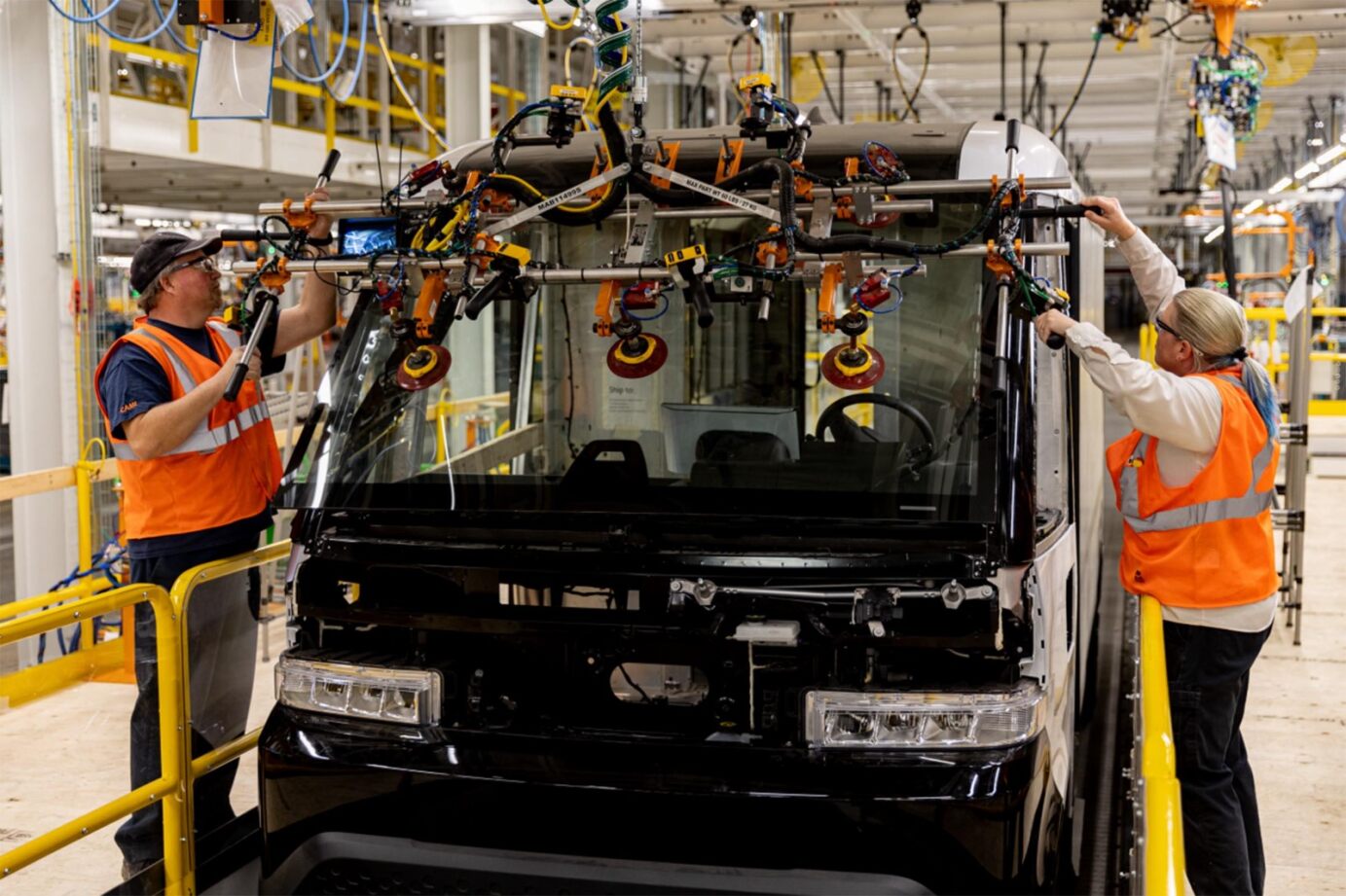
Workers assemble a vehicle at a GM production facility in Canada

Auto Parts Zigzag Across Border

Significantly, auto parts and components routinely zig and zag across the border. A widget produced in the U.S. may be shipped to an engine plant in Canada before the finished powertrain returns to the States for final assembly. Some parts, according to industry data, may traverse the Detroit River nearly a dozen times.

“We are proud that Ford of Canada is the country’s longest established automaker – its 121st year – and of Ford of Canada’s legacy of producing vehicles in Canada for domestic and global markets,” said Said Deep, Ford North America’s Communications Director.

The Detroit Three aren’t the only automakers that’ve taken advantage of the series of free trade agreements, an extensive list of foreign-based manufacturers, setting up their own cross-border supplier and production networks. Honda and Toyota produce two of their best-selling models — the CR-V and RAV4 crossovers, respectively— in Canada, funneling their products across the border to dealerships across the U.S.

Vehicles and vehicle parts were Michigan’s largest exports, with more than $25 billion in 2024.


Michigan is the nation’s largest exporter of vehicles and vehicle parts. Canada accounts for 55% of all transportation equipment trade with Michigan.


Transportation equipment exports accounted for 43% of all Michigan exports in 2024. (Source: International Trade Administration)

Confidence Remains Deeply Entrenched in Manufacturing Network

The future of the auto industry’s cross-border network currently faces uncertainty, caught up in the trade war launched by President Donald Trump shortly after taking office for a second term last January.

Negotiators from the U.S. and Canada, as well as Mexico, are currently working out potential revisions to the USMCA. And several automakers, including Honda and Stellantis, are looking at possible changes in their two-nation manufacturing strategies. But trade experts remain confident that any rule changes will allow the industry to retain the deeply entrenched manufacturing network that has been built up over the past century. And, in the process, that will maintain the critical importance of the region straddling the Detroit River.