Detroit Regional Chamber > Chamber > Conference Welcome | Baruah: ‘The World’s Knocking on Detroit’s Door’ 

Conference Welcome | Baruah: ‘The World’s Knocking on Detroit’s Door’ 

January 29, 2026 Anjelica Miller headshot

Anjelica Miller | Manager, Communications, Detroit Regional Chamber

Key Takeaways

  • Individuals and businesses must adapt to rapid changes in technology and policy, particularly the impact of AI on jobs and the importance of education and public policies in the 21st-century economy. 
  • Detroit’s revival over the last decade has been a model for other cities thanks toa collaborative efforts among government, civic, philanthropy, and business sectors, making the city a model for others. 
  • The Detroit Regional Chamber has been advocating for business interests, supporting civic responsibility, and advancing policies to help businesses flourish in Michigan.  

View the full session recording below.

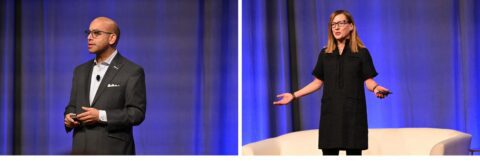
After an introduction from the Detroit Regional Chamber’s Chief Operating Officer and Chief Strategy Officer’s Megan Spanitz highlighting the Detroit Policy Conference’s new venue, Bedrock’s The Department at Hudson’s, Chamber President and Chief Executive Officer Sandy K. Baruah spoke to the theme of entering a “new era of leadership.” He highlighted what is on the horizon for the Detroit Region and Michigan, as well as how the Chamber is responding to some of the business industry’s most timely issues. 

Adapt or Die: Keeping Up With the Speed of Innovation

After highlighting the significant political changes coming up in Michigan, including open seats for governor, U.S. Senate, and several congressional seats, Baruah expressed his concern about the “back-and-forth” policy changes that occur in Lansing, and can challenge the business community, which thrives on stability to invest and grow.

“The speed of innovation grows even more rapidly every passing day,” he said. “And the level of policy change increasingly looks like a ping pong match … than it does serious policymaking.”

Baruah touched on the importance of businesses and individuals keeping up with the pace of technological innovation, like AI, sharing a quote from the Chamber’s Board of Directors Chair, Peter Quigley, and questioning whether our state is ready for these changes.

“AI may not take your job, but someone who understands and can use AI most certainly will…and that’s a new reality for us,” he said, citing Quigley. “Are our educational institutions up to the challenge? Are our businesses nimble enough? Do we have the right public policies in place for a rapidly changing 21st-century economy?”

How the Chamber is Meeting the Moment

Baruah highlighted Detroit’s impressive revival over the past decade, driven by collaboration between government, civic, philanthropic, and business sectors. He noted that Detroit is now a model for other cities and that businesses are investing heavily in the city’s future.

“The world is knocking on Detroit’s doors to see what they can learn from us,” he said. “And businesses are investing billions of dollars, making big bets on the future of the city.”

Baruah also touched on the Chamber’s most recent actions to continue bolstering a pro-growth business climate and to make the business case for democracy and civility through advocacy by its Public Policy and Business Advocacy team.

The Chamber’s TalentEd program is also continuing to increase postsecondary educational attainment through its Sixty by 30 initiative and by promoting a “K-12 + 2” approach to education.

Finally, MichAuto is continuing to support Michigan’s signature  automotive and mobility industry transition by developing a roadmap with statewide partners to educate Michigan’s new governor and the incoming legislature in 2027 on promoting, retaining, and growing Michigan’s signature industry.

All of these efforts and more have put the Detroit Regional Chamber on the global map.

“When it comes to what the world wants to know about Michigan … the Detroit Region … the automotive industry, they come to us. And we’re incredibly proud of that,” he said. “So the question for all of us, especially today [at] the Detroit Policy Conference, is that, are we ready to meet this moment … policy leadership, culturally, are we up to it? I think we are.”

This session was sponsored by DTE Energy.