

Detroit Regional Chamber > Advocacy > Beyond the Bill: Sen. Veronica Klinefelt

Beyond the Bill: Sen. Veronica Klinefelt

May 15, 2026 Ashley Mathews headshot

Ashley Mathews | Specialist, Public Policy and Business Advocacy, Detroit Regional Chamber

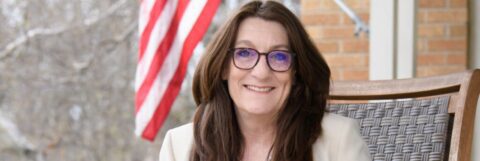
Photo credit: Sen. Veronica Klinefelt

Beyond the Bill is a rotating segment that features a Republican or Democrat Michigan Legislator for Chamber members to get to know on a more personal level and highlight their legislative priorities for Michiganders.

Michigan Sen. Veronica Klinefelt represents Michigan’s 11th District, including parts of Sterling Heights, Fraser, Roseville, Warren, and Eastpointe. Before becoming a state representative, Klinefelt served Michigan on the Eastpointe City Council, Macomb County Board of Commissioners, 8 ½ Mile Drain Board, as President of the Michigan Association of Counties (MAC), and as a representative on the National Association of Counties (NACo) Board of Directors.

Klinefelt’s involvement and service extend beyond her senatorial duties as Chair of the Local Government Committee, a member of the Veterans and Emergency Services Committee, and a member of the Appropriations Transportation Subcommittee. Additionally, she serves as Vice Chair of the Transportation and Infrastructure and multiple Appropriations Subcommittees, as a member of the Health Policy Committee, and as Minority Vice Chair of the Appropriations Department of Education Subcommittee.

Infrastructure and Economic Stability

Infrastructure modernization remains at the core of Klinefelt’s legislative work. She framed the issue not only as future‑focused, but as a responsibility to maintain what Michigan has already built.

“I am always passionate about infrastructure modernization because we did big and bold things in the past and we don’t do them anymore,” Klinefelt said. “We don’t even maintain what we have.”

That perspective has shaped her work on transportation funding. Klinefelt referenced legislation she sponsored as part of a road funding package last year, noting it has a direct impact on Michigan’s workforce and economy: “It’s going to keep thousands of workers from losing jobs.”

Community Impacts

Klinefelt highlighted the impact of Schools of Choice on innerring suburbs as an issue her district is facing and believes deserves greater statewide attention. 

“Since Schools of Choice was enacted, innerring suburbs have seen a massive shift in student enrollment,” she said. According to Klinefelt, that shift has contributed to “a breakdown of community,” because “none of the students in these communities attend schools in these communities.” She added that the result has been “a loss of parental involvement in the school districts and community involvement in general.” 

Preparing Michigan’s Future Workforce

Looking ahead, Klinefelt sees strong alignment between education and industry as critical to Michigan’s economic competitiveness, particularly in the automotive sector. 

“I think the partnerships that are the most important are between the high schools, the business technology corridor, and the automotive companies,” she said, emphasizing the need to “align the training of students for the jobs that will be available in the future.” 

Klinefelt underscored ongoing investments in postsecondary education and skilled trades as an example of a key opportunity to strengthen Michigan’s talent pipeline. 

“I think the biggest opportunity to strengthen our talent pipeline is the funding we are putting toward community colleges and skilled trades,” Klinefelt said.

Beyond Lansing

Outside of policy, Klinefelt is quick to highlight local favorites in her district. Her go‑to hidden gems include Cloverleaf Pizza and Plaza Mexico, both located in Eastpointe, Michigan.

When asked about her favorite Michigan-made products, she named Winter’s Sausage and Morley Candy/Sanders Chocolates as her go-to treats.