Detroit Regional Chamber > Advocacy > Small Businesses Face Tough Choices on Growth, Talent, and Rising Costs 

Small Businesses Face Tough Choices on Growth, Talent, and Rising Costs 

October 16, 2026 Anjelica Miller headshot

Anjelica Miller | Manager, Communications, Detroit Regional Chamber

What Should Small Business Leaders Know?

  • Focus marketing on a clear audience, a few priority channels, and a sustainable content cadence. 
  • Review employment policies regularly as Michigan leave requirements and payroll costs evolve. 
  • Manage health care costs through informed network, plan-design, pharmacy, and primary-care decisions. 
  • Use AI to accelerate marketing work, but keep people responsible for accuracy, judgment, and brand voice. 
  • Build a network of trusted advisors before compliance, benefits, or workforce challenges become urgent. 

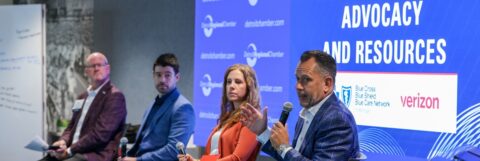
Small business leaders gathered at the Detroit Regional Chamber on Oct. 14 for Small Business Advocacy and Resources, a program focused on the decisions employers make as they pursue growth amid workforce pressures, evolving employment requirements, and rising health care costs. Following a group discussion on pressing small employer needs, the following panelists translated those challenges into practical guidance on marketing, human resources, benefits, and the responsible use of AI.

How Can Small Businesses Build Stronger Brands?

Nikki Little encouraged business owners to define the two or three qualities they want their company to be known for, identify the audiences most likely to value those qualities, and concentrate on the channels those customers use. For teams with limited time and resources, a focused presence is more effective than trying to follow every platform or trend. 

Little also emphasized consistency and authenticity over production volume. Frequently asked customer questions can become articles, emails, and social posts, allowing one useful idea to be adapted across channels. AI can help create those drafts, she said, but businesses should protect sensitive information, verify the output, and edit it to reflect their own voice. 

“Something we definitely recommend for any business using AI is investing in a kind of closed enterprise version of it so that your data is protected,” she said. “We always like to say, especially for our work on marketing and PR, we don’t copy and paste things from AI. AI is not perfect. You still need to fact-check, but it can get you really far.” 

What Employment Requirements Should Employers Watch?

Craig Vanderburg urged employers to review their handbooks and leave policies at least annually as local, state, and federal requirements change. He highlighted Michigan’s paid leave requirements and the potential for higher unemployment-related costs, noting that outdated policies can create compliance and budgeting risks. 

Vanderburg also explained that professional employer organizations can help businesses access human resources services, technology, workers’ compensation, retirement services, and insurance purchasing power. The right time to consider that model depends on workforce composition, hours, benefits needs, compliance exposure, and operating history—not headcount alone. 

“Under the Affordable Care Act, if you’re 50 or more [employees] eligible [for healthcare benefits] that in a year, then you do have an obligation to offer the minimum essential coverage. And generally, if you’re over 50, what you’re also trying to do with benefits is you’re trying to track talent. I mean, the whole myriad of strategies and benefits is massive.” 

How Can Employers Respond to Rising Health Care Costs?

Yaniv Ribon pointed to an aging population, chronic conditions, higher medical prices, hospital consolidation, and expensive medications as major cost pressures. Rather than eliminating coverage, he encouraged employers to work with qualified advisors to compare provider networks, pharmacy benefits, copays, and other plan details. 

Employers may also consider narrower networks, high-deductible or health savings account-compatible plans, virtual care, and stronger primary-care engagement. Ribon cautioned that every design choice involves tradeoffs, particularly for employees who may struggle to absorb higher out-of-pocket costs, making gradual implementation and clear communication important. 

“I think about it as a hierarchy. Number one in that hierarchy is to choose the right network. A PPO network, or third provider organization, that is very broad [in coverage]. And an HMO, health maintenance organization, which tends to be a little bit more narrow, but certainly enough to provide the kind of access that your employees are looking for,” he said. “Just by moving from a PPO to an HMO, without changing benefits, an employer can see around a 20% reduction in their health insurance premiums. 

What Can Business Owners Do in the Next 90 Days? 


Panelists closed with three priorities business owners can act on now: 


  • Identify trusted human resources, benefits, and compliance advisors before a problem emerges. 


  • Build a realistic marketing plan around customer questions, authentic content, and a sustainable cadence. 


  • Review policies, benefit structures, and external partnerships for opportunities to reduce risk and expand capacity.