
A series of rapid legislative developments and executive actions in Washington, D.C., has created an unpredictable landscape as lawmakers head toward the July 4 recess.
This Week in Government | Legislative Gridlock, Trade Reviews, and Utility Protections Confront Regional Commerce
July 2, 2026
Adam Majestic |
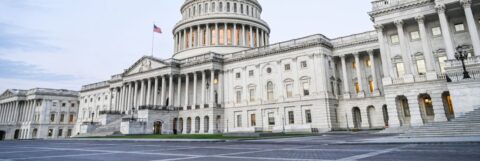
House Floor Frozen Over Election Security Dispute
A high-stakes procedural standoff in the House of Representatives has halted floor business, effectively freezing progress on the annual National Defense Authorization Act (NDAA) and fiscal 2027 spending bills. The gridlock, driven by disputes over stalled elections legislation, threatens to delay vital defense procurement and federal budgeting decisions that provide baseline stability for regional government contractors.
Notably, this infighting delays funding for Selfridge Air National Guard Base, an essential asset for Michigan’s defense industry. This NDAA provides $452 million to the base to prepare for new missions. The Detroit Regional Chamber has long supported this investment and played a critical role in securing the state’s investment in the runway, which was signed at the 2026 Mackinac Policy Conference.
USMCA Mandatory Review Begins Amid Executive Friction
Concurrently, the mandatory six-year review of the U.S.-Mexico-Canada Agreement (USMCA) began on July 1, 2026, amid explicit executive skepticism regarding the trillion-dollar pact. While Canada and Mexico have committed to a 16-year extension, the Trump administration’s hesitation could default the framework to turbulent annual reviews. This shift introduces protracted operational uncertainty for automakers and manufacturers that rely on deeply integrated, cross-border supply chains. Read more about the impact of a delayed USMCA here.
Bipartisan Housing Package Transmitted for Executive Action
On the regulatory front, the bipartisan “21st Century ROAD to Housing” Act was officially transmitted for executive consideration on Monday. Designed to expand housing supply and prohibit institutional investors from purchasing single-family homes, the affordability package is expected to become law by July 10, 2026. House leadership has indicated that sufficient bipartisan consensus exists to override a potential veto, as President Donald Trump has expressed reluctance to sign the legislation.
Sonderling Nominated to Permanently Lead Labor Department
Workforce regulators are also seeing a transition to greater stability following the formal nomination of acting Labor Secretary Keith Sonderling to permanently lead the U.S. Department of Labor. Sonderling, a veteran agency insider who took the acting helm in April 2026, maintains broad support from employers and business groups seeking predictable enforcement and regulatory clarity.
Grid Legislation Aims to Shield Commercial Ratepayers
Finally, infrastructure protections are advancing in Congress to shield consumers from the utility demands of artificial intelligence infrastructure. Due to House leadership sending lawmakers home for recess early, the U.S. House Energy and Commerce Committee postponed its planned Wednesday vote on the Ratepayer Protection Act, H.R. 9340, and a handful of grid bills. The legislation, which requires large data centers to cover the full costs of the new generation and grid upgrades required to serve them, is now expected to be taken up when both chambers return the week of July 13. Alongside the High-Capacity Grid Act, these measures intend to prevent industrial energy footprints from shifting infrastructure costs onto smaller commercial operations.