
Detroit Regional Chamber > Advocacy > A Promising Blueprint for Growth: Mayor Sheffield’s First State of the City 

A Promising Blueprint for Growth: Mayor Sheffield’s First State of the City 

April 1, 2026

Photo credit: City of Detroit

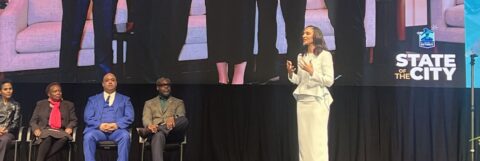
Mary Sheffield, who made history in January as Detroit’s first female mayor, delivered her first State of the City speech on March 31. Speaking to an energized crowd at Mumford High School, she centered her address on spreading Detroit’s resurgence block by block. Sheffield highlighted her administration’s early actions, including expanding funding for the  Affordable Housing Trust Fund and bringing the Rx Kids cash assistance program for mothers to the city.

The address offered an encouraging vision of neighborhood investment, red tape reduction, and talent attraction. The initiatives detailed present strong opportunities for collaboration, and the Chamber is optimistic about the implementation of these policy shifts.

Having previously served as Detroit City Council President, Sheffield knows the importance of collaboration between the Council and the executive office. She highlighted the need to maintain respectful relationships between the two bodies in order to continue delivering balanced budgets, fiscal stability, and growth in every corner of the city.

Chamber Perspective


Maintaining the City’s fiscal health is an absolute imperative to ensure the City’s progress. A strong relationship between the City Council and the Mayor’s office is key. 

Streamlining Business Operations and Retail Attraction

During her speech, Sheffield outlined a neighborhood anchor plan to make Detroit the easiest and most attractive city in America for retail. To do this, she plans to offer pre-approved designs for new home construction and speed up the permitting process. The administration announced plans to aggressively court national and local retailers, along with a commitment to same-day issuance of building permits for commercial rehabs.

Achieving lasting regulatory reform will require a sustained commitment across municipal departments, and the appointment of the city’s first director of retail attraction is a positive step toward clearing operational hurdles for incoming enterprises. In addition to commercial rehabs, the city must prioritize the construction of new residential units, focusing on the unique needs of every neighborhood while also building for the future.

Chamber Perspective


Having endorsed the Mayor last year during her campaign for the city’s top job, the Chamber looks forward to working with the administration on these efforts to reduce red tape, streamline business operations, and support the Mayor’s work to attract more retail to the city. 

Tackling Property Taxes and the Role of Data Centers

Noting that the cost of being a homeowner or business owner in the city is too high, Sheffield addressed the need to lower family expenses and the cost of doing business. She indicated that her administration is exploring ways to offset revenue losses to make the city’s tax rate more competitive with those of other major cities.  

Chamber Perspective


The Sheffield administration’s acknowledgment that current property tax rates are stifling growth is a welcome moment of fiscal clarity. 

The core challenge, however, lies in replacing that revenue. One potential strategy may be to embrace the development of data centers in the city as part of a broader push to position the city for success in the innovation economy. Data centers generate massive capital investment and substantial long-term tax revenue while requiring relatively few municipal services. Allowing these facilities to come to Detroit could provide the exact fiscal offset needed to make substantial property tax cuts a reality without compromising the city’s balanced budget. It is worth exploring in ways that work for each city and municipality in Michigan, which is why the Chamber recently joined the Michigan for Responsible Data Centers coalition 

Workforce, Wages, and Transit

On the workforce front, Sheffield issued an executive order setting a minimum income threshold for City employees. She also announced transit upgrades, including adding 80 new buses over two years, increasing starting driver wages to $25 an hour, and implementing a program allowing K-12 students to ride for free. 

Chamber Perspective


 Raising the standard of living is a net positive for overall economic stability, contributing to a more robust workforce and generating greater local purchasing power that ultimately benefits businesses across the Detroit Region.

On the transit front, expanding the bus fleet and increasing driver pay will only improve DDOT’s reliability. As the Chamber continues to support regional transit millages to connect talent to job centers across county lines, a robust and reliable city transit system is a crucial piece of the broader regional mobility puzzle.

Talent Attraction and Retention

To spur population growth and economic development, Sheffield unveiled a new growth strategy in partnership with Dan Gilbert. The program will provide Detroiters with $15,000 for homeownership and business growth, as well as $1,000 in relocation assistance to bring residents back to Detroit. 

Chamber Perspective


Population growth remains one of the Region’s most pressing challenges. The Move Detroit Coalition, which offers financial incentives for relocation and homeownership to boost Detroit’s long-stagnant population growth, is an important tool for achieving just that. Pairing these financial incentives with the administration’s broader promises of functional transit, competitive taxes, and a thriving commercial environment creates a compelling case for keeping and growing talent in Detroit.