The Detroit Region has emerged as a growing hub for tech and innovation. However, as the industry continues to evolve, driven by rapid technological advancements like AI, there is a pressing need to ensure the local workforce is equipped with the right skills and mindset to succeed.
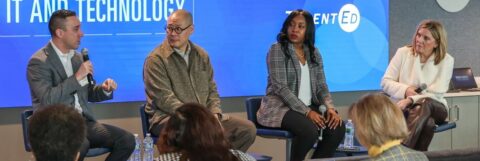
A recent panel discussion during the Detroit Regional Chamber’s new TalentEd Industry Insights series brought together industry experts from the Detroit community to explore the changing landscape of the tech job market and the strategies needed to prepare the next generation of talent. The conversation, moderated by Michigan Central Chief Executive Officer Carolina Pluszczynski, offered valuable insights into the challenges and opportunities facing both employers and talent.
Addressing the Tech Talent Mismatch
One key theme that emerged from the discussion was the need to address the mismatch between the skills companies require and the skills available in the talent pool.
Panelists highlighted the growing demand for skills like adaptability, problem framing, data and AI literacy, and change management. However, traditional education programs often do not adequately develop these skills, and employers frequently rely on outdated methods of assessing talent.
“The reality is, we’re still bringing talent in and still measuring people based on doing their job,” said Shatica McDonald, Accenture’s Michigan Office Managing Director. “What’s the value that we’re trying to achieve? It needs to shift to value creation as opposed to just ‘how do we measure you against your job?’ That’s a huge mismatch.”
Mission Command: Empowering the Tech Workforce
Closely tied to the skills gap is the need to shift organizational culture and management approaches. The panelists emphasized the importance of trusting and empowering employees, rather than micromanaging them.
Zach Plotzke, Chief Technology Officer at HiddenState AI, noted that Silicon Valley excels at fostering employee autonomy, which enables technology companies there to respond rapidly to market changes. In contrast, he observed that Detroit’s corporate environment remains more bureaucratic and restrictive.
“A lot of companies always talk about being agile, but I haven’t seen it in practice. It’s more of a buzzword,” he said.
Plotzke cited the military’s concept of mission command as a model for balancing oversight with employee empowerment. Leaders share objectives and desired outcomes while providing skilled team members with the authority to carry out the plans within established safety parameters.
“That’s something I don’t really see here in Detroit a lot because of the rigid structure that we have,” he said. “We’ve got to really take the handcuffs off of some of our young professionals.”
Bridging the Tech Ecosystem Gaps
At a broader scale, the panel discussion addressed the importance of strengthening the innovation ecosystem within the Detroit Region. Panelists highlighted challenges related to siloed social capital and emphasized the significance of creating more inclusive pathways to opportunity.
Song United Chief Executive Officer Dug Song, Detroit Regional Chamber Board Member, noted that relatively few technology companies are members of the Chamber, citing this as a key example.
“We have to figure out how to reach them, figure out how to bring the smaller set of startups that are coming into Detroit and coming up and out of Michigan to the world — how to get them involved in this stuff and into these kinds of business-educational round tables that are direct pathways for students to get experience,” he said.
The panelists also emphasized the value of learning from other successful tech hubs, such as Pittsburgh and Columbus, to identify best practices for building a thriving innovation ecosystem.
“In other places, they’ve really sort of figured it out and made a commitment [to] share tables to figure out the shared prosperity of the Region and not only involve business, but also academia and philanthropy, so that we’re all kind of rolling in the same direction,” Song said.