Detroit Regional Chamber > Advocacy > How Detroit Small Businesses Can Navigate Resources, Capital, and Connection

How Detroit Small Businesses Can Navigate Resources, Capital, and Connection

April 15, 2026 Allie Ciak headshot

Allie Ciak | Integrated Marketing Specialist, Detroit Regional Chamber

What determines whether the idea of a small business comes to fruition and grows into a sustainable company is access to capital, guidance, trusted resources, and people who understand the journey. 

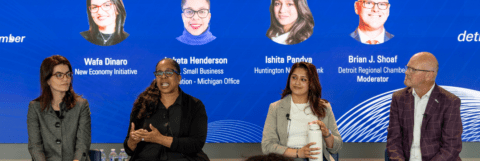
During the Small Business and Advocacy event hosted by the Detroit Regional Chamber, a panel discussion allowed small business owners to hear directly from leaders representing banking, federal small-business support, and the regional entrepreneurial ecosystem, who outlined how local businesses can better leverage existing resources to grow, compete, and thrive. 

Banking Support That Grows With the Business

For many entrepreneurs, the first major hurdle is access to capital. Representing Huntington National Bank, Community Lending Relationship Manager Ishita Pandya emphasized that strong banking relationships are built on understanding where a business is today and where it wants to go. 

“Our banking products and services are created to meet you where you’re at,” Pandya said. “We are able to do lending, everything from a startup to a business that has been around for generations. What sets our lending a little bit apart is that Huntington [is] a preferred lender … and can help you get through the process a little bit quicker.” 

In addition to offering no-cost accounts and relationship-based support through local branch managers who know their communities, Huntington’s role as a preferred Small Business Administration (SBA) lender is especially valuable for small businesses navigating financing. Because the bank processes SBA loans internally, entrepreneurs can often move through the lending process more quickly than expected, and it empowers business owners to better manage their finances. 

A Federal Partner For Growth, Contracts, and Capital

While banking relationships are critical, Laketa Henderson, District Director for the SBA Michigan District Office, reminded attendees that the SBA plays a distinct and complementary role. 

“Our role is to help small businesses start, grow, and expand,” she said. “We want to make sure that every business, business owners, and entrepreneur — that opportunities are distributed equally [to them].” 

Serving all 83 counties in Michigan, the SBA supports entrepreneurs through three core areas: counseling, contracting, and access to capital. Through SBA-funded resource partners, including SCORE, Small Business Development Centers, Women’s Business Centers, and Veterans Business Outreach Centers, business owners can access free guidance at every stage, from idea development to expansion. 

Henderson also emphasized the importance of federal contracting as a growth opportunity that many small businesses overlook. With nearly a quarter of federal contracts set aside for small businesses certified as Women-owned and Veteran-owned, having more access to opportunities can open doors to new markets and long-term revenue streams. 

Navigating the Ecosystem Without Guessing

Even with strong programs available, many entrepreneurs struggle to find the right support. That’s where Wafa Dinaro, Executive Director of the New Economy Initiative – Community Foundation for Southeast Michigan, focused her remarks on explaining how her organization helps businesses navigate the ecosystem itself. 

“Our goal is to support the entrepreneurial ecosystem, so we fund the nonprofits that directly support small businesses. We also look at the ecosystem holistically,” she said, highlighting that rather than duplicating services, the organization strengthens the network of local resource providers that entrepreneurs rely on. 

Dinaro highlighted the MI Small Business Helper as a particularly powerful tool. It is a digital, one-stop resource that connects business owners to trusted local assistance, step-by-step guidance, and funding partners. Through this platform, entrepreneurs can avoid unverified advice and instead connect with coaches and organizations embedded in their local communities.