Detroit Regional Chamber > Advocacy > Live From Mackinac Brought to You by DTE Energy, May 28

Live From Mackinac Brought to You by DTE Energy, May 28

June 5, 2026

During the 2026 Mackinac Policy Conference, “Live From Mackinac Brought to You by DTE Energy” featured on-air discussions with Michigan legislators and industry leaders on current political and economic issues. Sponsored by DTE Energy, this popular three-day program was hosted throughout the Conference in the Parlor at Grand Hotel, with the Detroit Regional Chamber’s Brian J. Shoaf as emcee. 

Catch up on the final day’s conversations below. 

Opening the final day of “Live From Mackinac,” Glengariff Group’s Richard Czuba talked more data and numbers with Nick Monacelli of WDIV-TV Local 4 News, including some more insight from the Chamber’s 2026 Statewide Voter Poll. They also spoke about the unfortunate passing of bipartisan congressman Joe Schwartz, literacy rates in Michigan, and how the legislature can continue to find common ground together.  

“I think the first step, and from the data we have from the surveys, voters simply don’t know we have these problems… the elevation of these concerns, these statistics, these facts at this conference is the first step, you can’t solve a problem if the voters of Michigan do not know it’s a problem,” Czuba said. “In the ‘60s and ‘70s, Michigan was the center of the world. The world is passing us by because we are clinging to that nostalgia. Michiganders need to know that we are being left in the dust, and we need to step it up.”


Michigan Sen. Mike Webber (R-Rochester Hills) joined the Live from Mackinac stage with WDIV-TV Local 4’s Nick Monacelli to discuss the priorities of Michigan Senate Republicans, hitting on all topics ranging from the budget, bipartisan goals, the Selfridge supplemental, and more.  

“I think right now we have so many people that come up there and they’re worried about the next election. I think we need to be worried about governing. We know that we have serious issues we need to tackle in the state of Michigan,” Webber explained. “My voting record speaks for itself. It’s one of the most bipartisan records in the legislature… You get a lot of pressure on you to vote a certain way, but at the end of the day, you have to vote for your district, and you have to understand that the people pay us and elect us to go there and try to handle these big issues.” 

State Sen. Kevin Hertel (D-St. Clair Shores) and Rep. Greg VanWoerkom (R-Norton Shores) joined by Paul Miller of WPHM-AM to discuss the recent cuts to Medicaid, Michigan’s current health policy work, the importance of mental/behavioral health support, and where they have found common ground. 

“I think we both have the same goal, making sure that our Medicaid system is sustainable, that our hospital system can deliver the needs, not only in urban areas but also in rural areas,” Hertel said. “We have to work in the reality that we have, so knowing these cuts are coming, we need to be doing everything that we can…to make sure we are bringing every dollar we can into this state to bring healthcare to every corner of Michigan”.  

“I have the Medicaid and Behavioral Health budget too; behavioral health has been an issue that we’ve been talking about for a long time at the state level… and we have seen some creative things. You’re seeing new programs, but the demand is getting higher and higher,” VanWoerkom highlighted. “We need to start looking at how we actually deliver a service, actually get people to the support and assistance they need.”

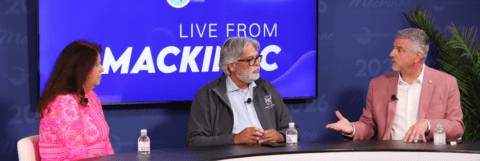
Michigan State Board of Trustees Member Rebecca Bahar-Cook and the University of Michigan Regent Chair Sarah Hubbard also chatted with WPHM-AM’s Paul Miller about top Michigan R1 university issues, including the state’s anomaly in university leadership governance. However, the two university leaders believe that we all need to do a better job of boasting about all the good the Michigan universities are doing for students and the community. 

“There [are] really exciting things going on in the state of Michigan at all of the R1 universities and I think we need to do a better job of sharing that with people,” Bahar-Cook said, “Talking about some of the discoveries, talking about the economic development, talking about what or alumni are bring back to the state in terms of how much money they spend and how much it brings back.” 

One thing too [that’ we’re trying to do more in economic development with partnerships at the University of Michigan,” Hubbard said, “be that engine of economic innovation and growth, and find those ways to create the ecosystem there for more innovation. We have a lot of proposals around that.”

In a conversation with Michael Patrick Shiels of Michigan’s Big Show, state Reps. Tom Kunse (R-Clare) and Angela Witwer (D-Delta Twp.) discussed the importance of bipartisanship at the forefront of policy work in Lansing and beyond, even when a more appealing shortcut is presented. 

“My last election was one of the largest Republican margins in the state,” Kunse said. “So, I could go to Lansing and vote no on everything Democrat and get elected for the rest of my life. But it’s not productive; it’s not going to get things done. So, you have to decide: do you want to be an activist or do you want to be effective?” 

“When you do a bill package, find someone from the other party to be a part of that so that every bill package is bipartisan,” Witwer said. “We were really good at that when I started in the legislature, and we’ve gotten away from it a little bit. We are not know-it-alls. We need the other side to help us and become the best we can be.” 

University of Michigan Regent Sarah Hubbard of Acuitas also took to the DTE Stage as moderator, first interviewing State Rep. Mike Hoadley (R-Au Grues) and Sen. Sam Singh (D-East Lansing) on payroll tax credits, like the Good Jobs legislation, as well as other economic development policies to help drive Michigan’s economy forward and continue making Michigan a business-friendly state.

“We do have to be looking at transformational brownfields. We need to be looking at site-readiness,” Hoadley said. “We need to be looking at how do we attract those emerging technologies. And workforce development’s going to be huge on that …”

“There’s a lot of good policy that unfortunately has been bottled up in both chambers, and there’s a point in time where we have to reach across the aisle,” Singh said. “… we have all this pent-up energy of things that we need to get done as a state, and if we don’t address those issues, they [still] have to be done.”

Closing out the final day of the “Live From Mackinac” stage, University of Michigan Regent Sarah Hubbard of Acuitas spoke with State Reps. Stephen Wooden (D-Grand Rapids) and Stephanie Young (D-Detroit) on their party’s policy priorities during the second half of 2026, which include child care services, subsidized housing, and making “life more affordable in Michigan.”

“We absolutely need to create more tools in the toolbox to create housing at all price points so that we can retain employees, so that we can engage with the business community, so that we can engage with the development community, and come together to tackle an issue that’s affecting all of us,” Wooden said.

“Since I’ve been in the legislative, I’ve been … making certain that people even have access — once we even have — the housing,” Young said, “Making certain that the community has access to funding to be able to afford these homes that we’re talking about building.”