Detroit Regional Chamber > Mackinac Policy Conference > Sheffield: ‘Poverty Elimination is a Growth Strategy’

Sheffield: ‘Poverty Elimination is a Growth Strategy’

May 28, 2026 Folashade Iposu headshot

Folashade Iposu | Intern, Integrated Communications, Detroit Regional Chamber

Top Takeaways

  • Investing in people is the foundation for economic success in Detroit. 
  • “Raising incomes is not just compassionate policy, it is sound economic policy.” 
  • Residents of Detroit and the city’s businesses do not exist apart; “people need businesses and businesses need people.” 

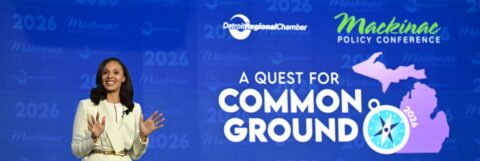
Making her debut keynote address on the Mackinac stage, Detroit Mayor Mary Sheffield describes Detroit’s progress over the last decade as undeniable. But instead of maintaining the progress made before herthe first Black female mayor intends to help Detroit “rise higher” through bold thinking.

View the full video below.

Investing in People is the Foundation

Sheffield told Conference attendees that Detroit’s economic growth can’t be measured solely by the number of buildings under construction or population growth, but that the city should seek sustainable growth. While those efforts are still important, to see progress that lasts, “we must go a bit deeper.” 

“Building the foundation is about whether families can afford to stay in communities where they live, where children have a pathway to opportunity, and where families can build generational wealth,” Sheffield said. “Growth is only sustainable if it is rooted in the well-being of people.” 

Eliminating Poverty is a Stimulus

During her keynote, Sheffield points directly to data regarding Detroit’s credit rating and how it has been impacted by the poverty status of many residents. After meeting with two premier credit rating agencies, S&P and Moody’s, these agencies concluded that income levels were heavily impacting the credit rating, a flag that has also been raised by the Detroit Regional Chamber in their 2026 State of the Region findings. 

“One of the most important economic indicators, they said, was the income levels of our residents, and they said Detroit’s persistent social challenges, poverty, and unemployment are holding us back,” Sheffield emphasized. “I am happy to report that after our meeting last week … they quoted that because of strong governance and mayoral priorities that focus on reducing poverty, strengthening neighborhoods, affordability, and fueling growth was contributed to these upgrades.” 

People Need Business and Business Needs People

Sheffield also addressed the concerns of those who believe that investing in people takes away focus from economic opportunity. She reaffirms that investing in Detroit’s residents is not a poor economic choice; it’s part of a growth strategy that will create sustainable development for the city.  

“When we invest in people first, we create a more capable and strengthened workforce, which naturally increases income. When we have higher incomes, we create the conditions for development and retail to come back into our neighborhoods,” the mayor said. “We don’t have to choose between people or business. There is a symbiotic relationship between the two.” 

Amidst the mayor’s poverty elimination efforts, the focus has not left businesses and economic growth. Sheffield has already been implementing funding and support for existing businesses, investing in innovation and technology, and pouring into the next generation of children and teens in the Detroit area; the initiatives that work together to help Detroit thrive.  

Sheffield concluded with a call to action for attendees to wear a sticker throughout the remainder of the Conference. She said, “When someone asks you what the words on that sticker mean, I hope you’ll tell them that Mayor Sheffield from Detroit wants everyone on the Island to know and to believe that poverty elimination is a growth strategy.” 

This session was sponsored by Strategic Staffing Solutions.